
Yes, you can tile over a brick fireplace. Tile bonds well to brick when the surface is prepped correctly, it stands up to high heat, and it won’t catch fire, which makes it a safe and popular way to reface a fireplace or hearth without tearing out any masonry. The catch is in the prep and the method. Skip those, and the tile fails.
That answer surprises a lot of homeowners. A brick fireplace looks like it’s staying put forever. Permanent. Immovable. The thing the whole living room was built around, whether you like it or not.
And plenty of people don’t. We walk into colonials in Wellesley and Weston all the time where a beautiful room is anchored by a fireplace stuck in 1974. Whether you’ve just bought a home with a dated fireplace or you’ve been staring at yours for years wishing it looked different, tiling over a brick hearth is one of the highest-impact interior projects you can take on.
So let’s get into it. How tiling over a brick fireplace actually works, when it makes sense, and a couple of related questions we hear on almost every fireplace visit.
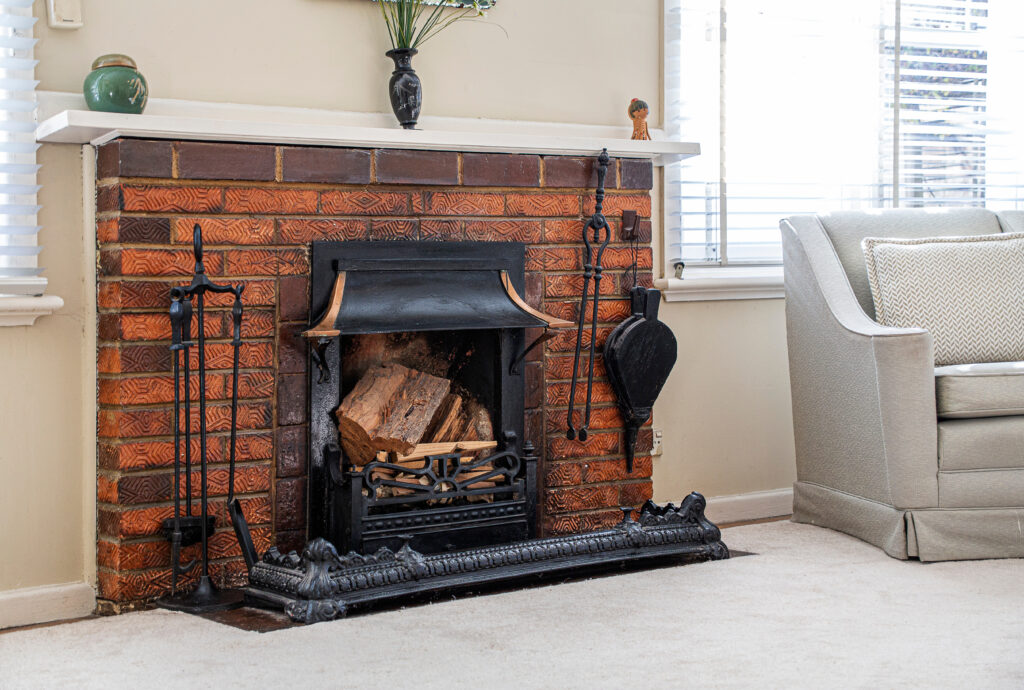
How to Tile Over a Brick Fireplace: The Right Way
Here’s where DIY projects go sideways. The tiling part looks easy on video. What the videos skip is everything that happens before a single tile touches the wall, and that prep is most of the job. Brick and tile are both sturdy materials, but put them together without the right foundation and you get hollow spots, cracked grout, and a finish that never looks quite right. Walk through the steps below and you’ll see why the pros spend more time prepping than tiling.
Prepping the Area
Everything comes off first. Mantel, hooks, any attachments. A drop cloth covers the hearth, then the brick gets worked over with a wire brush until the loose mortar lets go. After that, the whole surface gets wiped down with a rag soaked in white vinegar. Sounds odd, works great. Decades of wood fires leave more soot behind than you’d ever guess, and thinset won’t bond to it.
Then comes the part nobody enjoys: waiting. The brick has to dry completely, which takes one to two days. Not one day if you’re impatient. Moisture trapped behind fresh cement is the quiet reason good-looking tile jobs fail two winters later, so this is not the step to rush.
Laying the Foundation
Brick is bumpy. Tile wants flat. The bridge between the two is a skim coat, a special cement mix troweled thinly across the whole fireplace face. Done right, it levels the surface without building the fireplace out too far into the room, which matters more than people realize on a shallow hearth.
The cement gets pressed hard into every grout line between the bricks with a flat trowel. Any depression left behind will telegraph through the finished tile eventually, so the target is a surface with no dips at all.
It rarely happens in one pass. The first coat usually dries with faint indentations where the grout lines used to be, so a second whisper-thin coat goes over it to fill them in. Tedious? A little. Worth it? Every time.
Adding Your Tiles
Flat surface achieved, the tiles finally go up. New step, new tools. The flat trowel gets swapped for a notched one, and the mix changes to a latex-modified thinset that actually grips tile.
This is the step where experience shows. Too much thinset squeezes out everywhere and makes a mess of the joints. Too little, and you get hollow spots that crack down the road. And gravity never stops working: fresh-set tiles want to slide, and on a vertical fireplace face they will, slowly, unless whoever’s setting them knows how to hold their lines. Get it wrong and the finished wall reads slanted, uneven, even droopy. The crisp lines and pattern you were picturing depend entirely on this hour of the job.
Polishing It Off
Tiles set, hands off. The fireplace gets left alone while the thinset cures, with one exception: before it fully dries, the surface gets a pass with a wet sponge to lift any adhesive that bulged through between tiles. Miss that window and you’re chipping it off later.
Then a minimum of 24 hours of drying, and finally, grout. Grout is the finish line, the thing that turns a wall of individual tiles into one smooth, polished surface. One warning worth heeding: some grout types will damage certain tiles, and the wrong bag from the hardware store can undo a week of careful work. It’s the last reason on a long list to let a professional tiler carry this one home. The reward is a fireplace that looks like it was always meant to be there.
Should You Tile Over Your Brick Fireplace?
Possible, sure. But should you? To some, covering a brick hearth is a travesty. To others, it’s the upgrade the whole room has been waiting for.
It comes down to preference, and if your preference is anything other than exposed brick, tiling over your brick fireplace is a great way to transform the space. Here’s what it opens up.
Alter the Architecture
Most brick fireplaces look like most other brick fireplaces. Tile breaks that mold.
If yours overpowers the room, a tile color pulled from the rest of your palette lets it settle back and blend in. If the room feels flat and you want the fireplace to carry it, bold color or patterned tile turns it into a deliberate statement piece. Same fireplace, opposite outcomes, and tile can take you either direction.
The shape of the tile does quiet work, too. Run wide tiles horizontally across the hearth and the fireplace reads wider. Choose an intentionally vertical format and it reads taller. You’re not just re-skinning the brick. You’re redrawing the proportions of the room’s focal point.
Achieve Any Style
Some interior styles and traditional brick just don’t get along. A Scandinavian-leaning living room with an orange 1970s brick wall in the middle of it is fighting itself, and no amount of styling fixes that.
Tile ends the fight. A great tiling job can take a brick hearth almost anywhere you can picture: tiles that mimic stone, tiles that read as wood, and for modern, minimal rooms, simple white or black tile that makes the hearth look sleek and clean. The range of tile styles on the market right now is genuinely enormous, which is a nice problem to have.
A Low-Maintenance, High-Safety Choice
Now the practical argument. Try wiping down a brick fireplace like a countertop. You can’t. Dusting is about the best brick allows, and every fire adds a little more soot to a surface that refuses to give it back.
Tile flips that. Any mess wipes up in one swipe. Soot and debris stop being a lingering nuisance and become a ten-second cleanup, with no sealing and no ongoing maintenance on the calendar.
Heat is no problem either. Tile withstands extreme temperatures, so even homeowners with an open wood-burning fireplace can use it as a styling option. Season after season, it won’t easily crack or chip from wear.
Can You Tile Over a Tile Fireplace?
This one comes up more than you’d expect, usually from homeowners whose fireplace was already refaced once, decades ago, in a tile they can’t stand.
The answer is usually yes, with conditions. The existing tile has to be soundly bonded, so a professional will check for hollow spots and loose pieces first. The old glazed surface also has to be roughed up or primed so the new thinset can grip it. And stacking a second layer builds the fireplace out further into the room, which matters on a shallow hearth. When the old tile is loose or the buildup is too thick, removing it first is the better call. It’s a case-by-case judgment, and it’s exactly the kind of thing a quick site visit settles.
Want the Brick Look Without the Old Brick?
Funny thing about this whole topic: some homeowners cover their brick, and others go looking for brick tiles for their fireplace because they want that classic look, just cleaner and more uniform than what they have.
Brick-effect tiles give you exactly that. The warmth and texture of a traditional brick fireplace, but in a fresh, consistent finish, with color options real reclaimed brick can’t offer. It’s a nice middle path if you love the character of brick but not the condition of yours.
Common Questions About Tiling Over a Brick Fireplace
Can you tile over a brick fireplace without removing the brick?
Yes. That’s the whole appeal. The brick stays put and acts as the structural base, a cement skim coat levels the surface, and the new tile bonds on top with latex-modified thinset. No demolition, far less mess, and a fraction of the cost of tearing out masonry.
What kind of tile works over a brick fireplace?
Almost any tile rated for heat, which covers most ceramic and porcelain options. That’s why the style range is so wide, from stone and wood-look tile to sleek modern white or black to brick-effect tile. The bigger constraint isn’t the tile, it’s the installation. The surface prep and the right thinset matter more than the tile you fall in love with.
How long does tiling over a brick fireplace take?
Plan on the better part of a week from start to finish. The brick needs one to two days to dry after cleaning, the skim coats need drying time between passes, the thinset needs to cure, and grout comes at least 24 hours after that. Most of that time is waiting, not working, but rushing any of those dry times is how tile jobs fail early.
Transform Your Home’s Focal Point
The fireplace is going to be the focal point of the room whether you love it or not. That part isn’t optional. What it looks like while it’s doing that job is entirely up to you.
If you’ve been staring at yours wondering what the space could be, tiling over the brick is one of the fastest ways to find out. Ulta Home Improvements offers home improvement without the pain. Contact us to get a free quote on your project.