
Most homeowners know their water heater is getting old. Maybe it has been making a noise for a while. Maybe the hot water has been running out a little faster than it used to. But nothing has actually stopped working, so it stays on the mental back burner.
That is a pretty natural way to handle it. Until the morning you walk downstairs and find water on the floor.
At that point, you are not just replacing a water heater anymore. You are replacing a water heater and dealing with everything the water touched on the way out. That is a very different project, and a much more expensive one.
Here is an honest look at what that cost difference actually looks like, and why getting ahead of it almost always makes more sense.
What Water Heater Failure Actually Looks Like
Not every failure is a flood. In fact, most of them are not. But the quiet ones can end up being just as costly if they go unnoticed long enough.
The Slow Leak
This is the more common scenario. A small leak develops at a fitting, a valve, or along the base of the tank. It drips for days or weeks before anyone notices. In the meantime, water works its way under the flooring, into the subfloor, and sometimes behind drywall. By the time it is visible, there may already be mold forming in places that require professional remediation before any other repairs can happen.
The Sudden Failure
Less common, but it happens. The tank ruptures or a fitting gives out and releases a significant amount of water all at once. The damage tends to be concentrated but severe. Flooring, drywall, and framing can all be affected depending on where the unit is and how quickly someone gets to the shutoff.
Either way, the unit still needs to be replaced. The question is just how much else needs to be addressed at the same time.
What the Numbers Actually Look Like
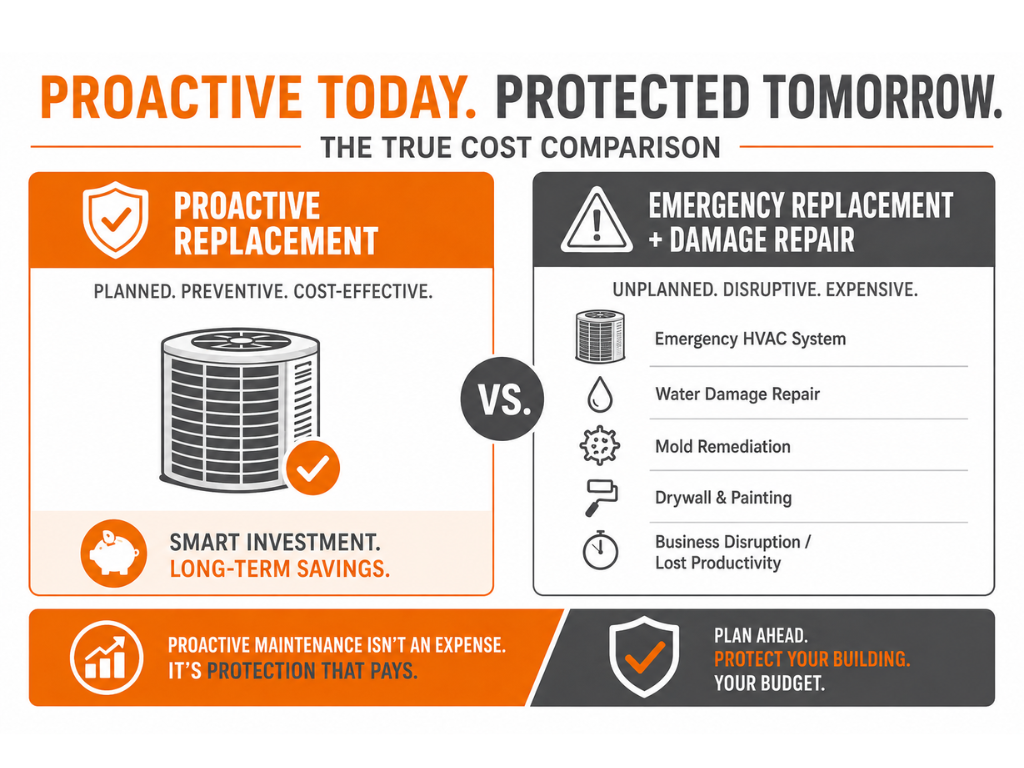
These are general ranges, not fixed quotes. Every home and every situation is a little different. But the gap between acting proactively and reacting to a failure is consistent enough to be worth understanding.
Proactive Replacement
When you replace your water heater on your own schedule, before anything fails, the project is straightforward. The old unit comes out, a new one goes in, and you choose the timing and the equipment. Depending on the unit and whether any adjustments are needed to existing connections, this typically runs somewhere between $1,000 and $3,000.
No urgency. No collateral damage. Just a planned home improvement with a clear outcome.
Reactive Replacement After a Failure
Once there has been a leak, the scope of work expands. Beyond replacing the unit itself, you may also be dealing with:
- Flooring replacement: depending on the material and how long water was sitting, this can add several thousand dollars on its own
- Subfloor repair: if moisture has had time to compromise the structural layer underneath
- Drywall replacement: especially in finished basements or utility rooms that share walls with living spaces
- Mold remediation: if moisture has been present long enough to cause growth behind walls or under floors, this has to be addressed before any other repairs can happen
- Emergency service costs: unplanned replacements often involve faster turnaround, which can carry higher labor rates
Add that up and the total can easily exceed $5,000. In more serious cases, with significant water damage and mold involved, it is not unusual to see $10,000 to $15,000 or more. That is not a worst-case exaggeration. That is a realistic outcome when a slow leak goes undetected for any real length of time.
What Getting Ahead of It Actually Involves
One of the reasons homeowners put this off is that replacing a water heater feels like a big, complicated project. It really does not have to be.
When you work with Ulta Home Plumbing, we start with a free inspection. If your unit is getting up there in age or showing early warning signs, we will give you a straight answer about where things stand. No pressure to move forward on the spot, just information.
If replacement makes sense, here is what the process looks like:
- We confirm the right unit for your home based on household size, usage, and whether you want to stay with a tank system or consider tankless
- The old unit is removed and disposed of properly
- The new unit is installed and tested
- We leave the space clean and walk you through anything you need to know about the new system
Most standard replacements get done in a single visit. The goal is for it to feel like a normal home project, not a stressful emergency.
What If Something Has Already Failed
If you are reading this because a leak has already happened, it is still a manageable situation. Ulta Home Plumbing handles the full picture, not just the plumbing. That means we can coordinate the replacement alongside any repairs to flooring, drywall, or framing, so you are working with one team instead of trying to line up multiple contractors in the middle of a stressful situation.
We also make sure the work is documented clearly, which matters if you are filing a homeowner’s insurance claim for any of the secondary damage.
The Short Version
Replacing a water heater on your own terms costs a fraction of what it costs after a failure. The window to act proactively is usually bigger than people think. A unit that is making noise, running inconsistently, or just getting old is telling you something worth listening to.
If your unit is more than 8 years old, or you noticed any of the warning signs we covered last month, a free inspection is a good next step. One visit, a straight answer, no commitment required.
Request a quote at ultahome.com/plumbing-heating/
Serving Ashland, Framingham, Wellesley, Weston, Westborough, and surrounding MetroWest communities.